The way we play
Making room for imperfection
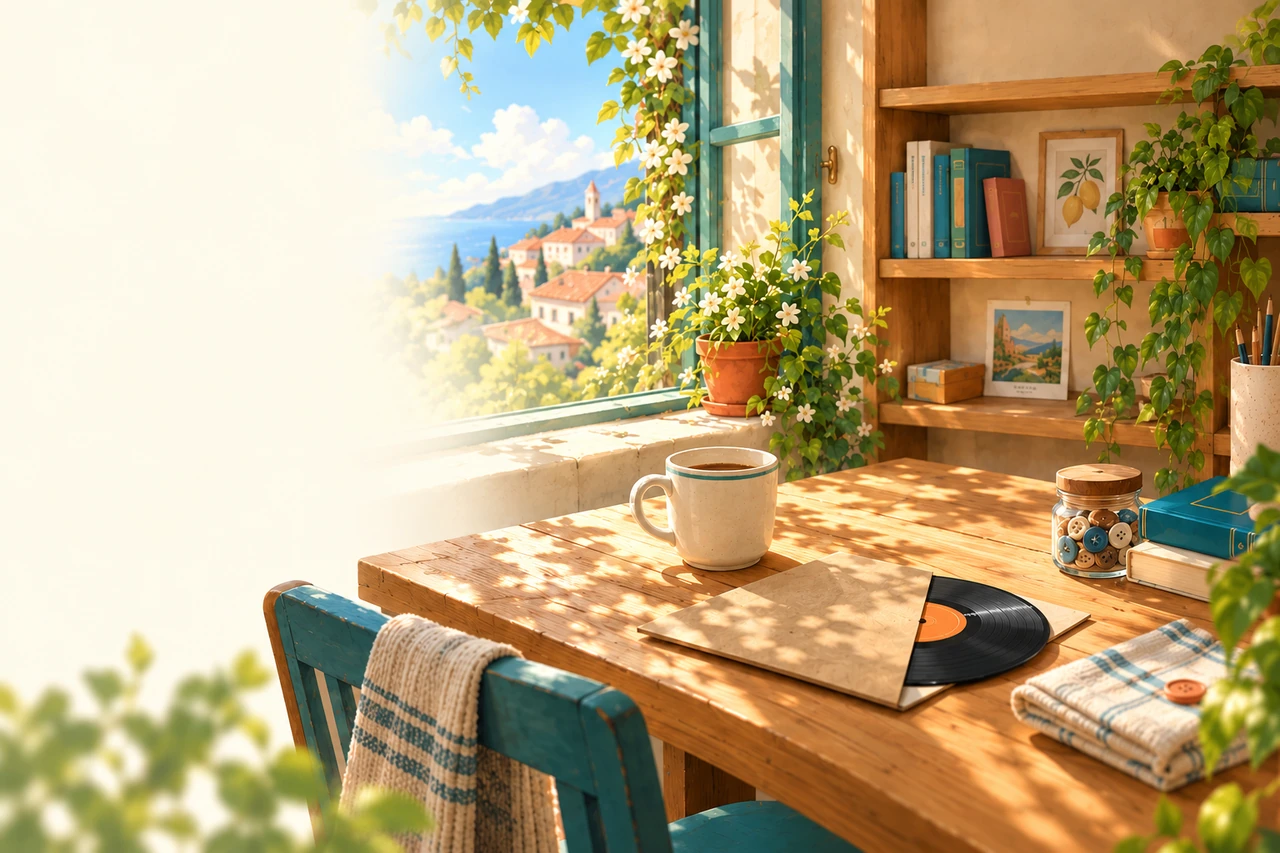
A useful surface, a familiar cup, a visit you can finish in your own time. The care behind a quieter kind of arranging.

An invitation to belong
You’re the new neighbour. An invitation brings you into someone’s room for mending, music or tea. Help arrange their belongings in bags, boxes, trays and other useful places, and get to know the person behind them.
Mira’s welcome begins with a cup and a mending afternoon. You offer a little help finding room for her gathered things; she offers time, conversation and kindness. Introductions lead to more doors, each with an ordinary reason to spend an afternoon together.
A repair basket, a record carrier or a tray of tea tells you what someone has in mind. Arranging makes room for that moment. What grows across the visits is familiarity: a person you know, a door you can knock on, a place already waiting at supper.
A room is a place to do things
Unbox Us is a cozy room-organizing game built around useful places, neighbour stories and the freedom to stop before a room is perfectly tidy. We want the arranging to leave space for everyday life.
A table can be ready for an afternoon with a book still open on it. A cup can be exactly where somebody wants it, rather than hidden in a cupboard. In Unbox Us, arranging starts with the life a room is making space for.
That gives each visit a purpose beyond an empty floor. Mira is preparing for neighbours to bring their mending. Esmé is choosing music for supper. Neri wants work things somewhere findable and room to read in the shade. The belongings matter because these are places people use.
Useful places leave choices open
An object needs to fit. A shelf already occupied by something else cannot quietly become free, and an opening needs enough clearance to open. Those physical limits make a room understandable while leaving more than one arrangement possible.
Suggested homes help you read the space. They do not turn it into a required-slot solution. You can keep a useful tool near a project or find another clear place for it. If a proposal does not work, the feedback belongs near the object you are moving.
A temporary spot on the floor can help you think, but useful placement on furniture is what counts as putting something away. The distinction keeps the acknowledgement connected to the actual room rather than to how many gestures you have made.
Changing your mind belongs in the interaction
Pick something up, turn it and try another spot. Direct arranging makes the decision visible in the room. Undo gives you a way back from a committed move, and recovery helps you reach a belonging that is hard to pick out.
Opening storage stays separate from placing an object. Looking inside a drawer should not silently put a belonging away. The room can offer information without making a choice for you.
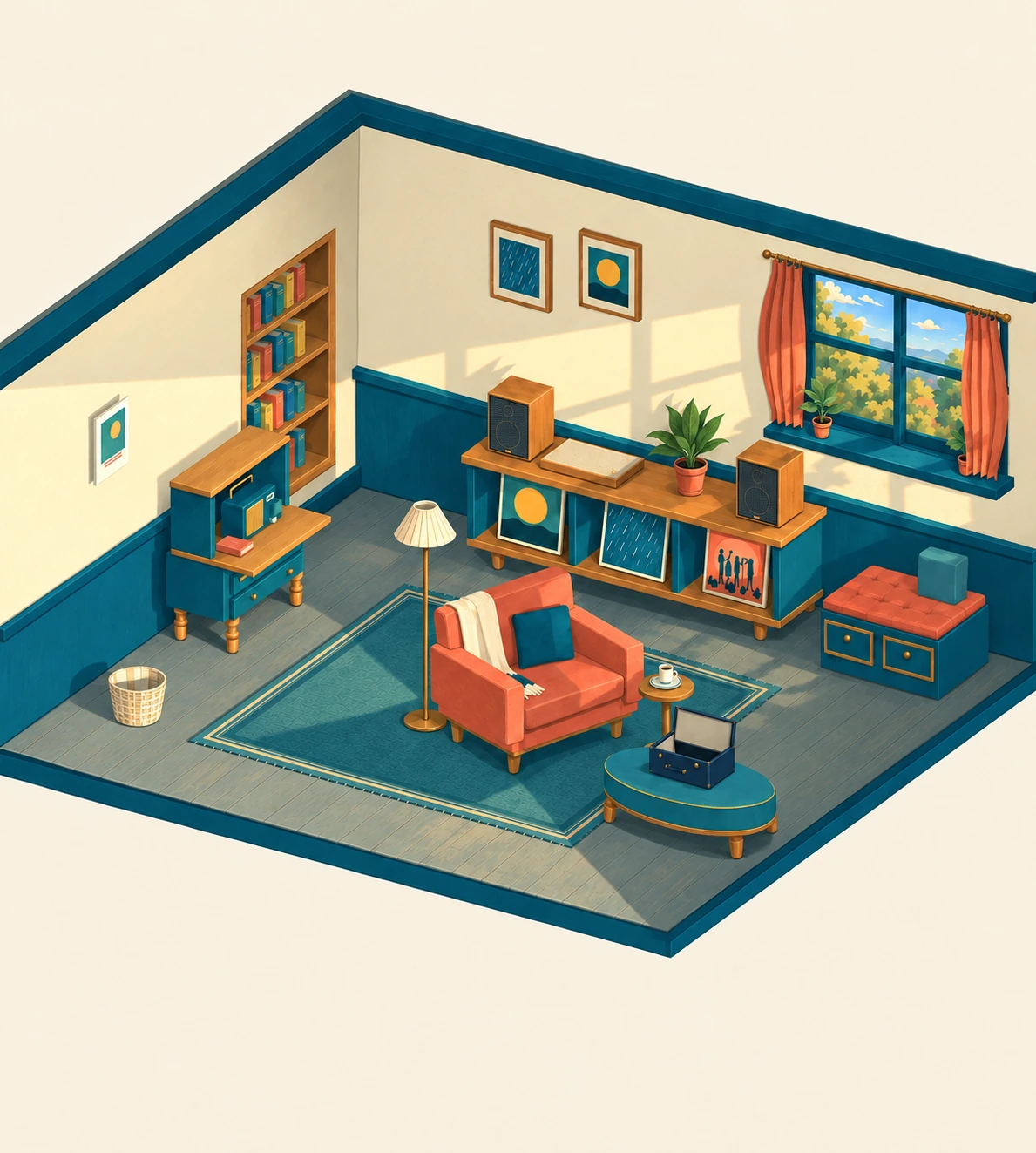
The website’s one-sleeve scene is a small illustration of this approach. Its furniture surfaces have real edges and occupied areas; it is not a sequence of destination buttons. It remains separate from the native game and its saves.
Company does not have to wait for completion
There is no timer asking you to hurry. You can deliberately finish a visit before everything is put away. The goodbye recognises the visit you actually made, and Memories keeps its photographs separately from arranging Undo.
This matters to the neighbour stories. Mira’s welcome is not a reward for an immaculate workshop. Esmé can enjoy company before every record has a home. Neri can sit down before tidying is complete.
The aim is a room with a little more possibility: a reachable tool, a clear enough place to work, a familiar object where it can be enjoyed. There can still be things out. There can still be life happening.
A little more to explore
Room for your way.
Discover the rooms and the arranging behind these stories.
Discover the game